Migrating from VMware to Kubernetes

summary
Forklift migrates VMs from VMware, RHV, OpenStack and OVA into Kubernetes KubeVirt/OpenShift by combining virt‑conversion (virt‑v2v with NBDKit and a user‑supplied VDDK) and a warm migration workflow that snapshots disks and ships deltas to cut downtime to minutes. A storage XCOPY offload implemented as a VIB/populator moves volumes directly via the array, yielding measured speedups (examples show 12–21× faster) with current limits of two XCOPY ops per ESXi host and one disk per VM. Everything is open source on GitHub.
AI-written summary · about
chapters (12)
- 0:00VMware migration challenges
- 1:24Broadcom acquisition impact
- 3:09virt-v2v VM migrations
- 5:23Forklift Kubernetes migration
- 6:27Warm migration low downtime
- 9:38Live Forklift migration demo
- 14:39Storage offloading for speed
- 20:39XCOPY offload with arrays
- 24:12Adding storage providers
- 27:45Open source success story
- 29:29Summary and next steps
- 30:13Q&A
related talks
 27mZero copy migration from VMware to Kubernetes
 33mCan You Move Production vSphere VMs To KubeVirt? Yes. Here's How
 31mElephant in the room
 27mCase Study: Volume Populators for Virtual Disks?
 15mFrom ESXi to Kubernetes: Modernizing 1,400 Edge Locations with Open Source
 42mVirtual Machine Orchestration in Kubernetes Utilizing KubeVirt
 13mKeynote: Our Journey Towards KubeVirt Based HyperConverged Infrastructure...
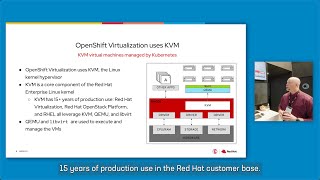 09mMigrating VMs to Red Hat OpenShift Virtualization