The long road to autonomous cybersecurity
summary
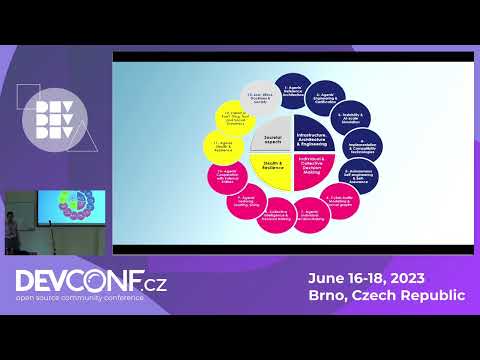
Current capabilities hinge on data and environment limits: realistic cyber training needs far more varied datasets than exist and full virtualization is too slow and costly, so development builds a CYST cybersecurity simulation platform — a discrete event simulator that models lateral movement, messages, CVEs and integrates with Metasploit — and a planned AI-Dojo project to generate realistic scenarios and bridge simulation-to-emulation. Prototypes train agents reusable in the wild, teams ~10 develop scenario generators and a Dockerized transition path; results are promising but not production‑ready.
AI-written summary · about
chapters (19)
- 0:00Start
- 0:37Chatbots that can pass Turing test
- 1:02So... how about security?
- 1:44What is the problem with security?
- 4:05Which training environment paradigm to choose?
- 5:37Quiz time!
- 6:01Simulation environments
- 8:28Simulation creation deep dive
- 9:03Network modelling
- 10:58Host modelling
- 12:15Connections modelling
- 13:08User modelling
- 14:04Hundreds of considerations
- 14:56Attack modelling
- 16:11Actions and behavior
- 18:43CYST: One combination of all possible
- 20:26CYST: Functional requirements
- 21:57CYST - roadmap
- 25:23Autonomous security
related talks
 41mKeynote:Bend the Machine: The Hacker Path to Autonomy in the Real World
 52mReinforcement Learning for Autonomous Cyber Defense
 26mImproving Cybersecurity Posture with an AI Security Assistant
 50mHow to Build Synthetic Persons in Cyberspace
 34mThe dual role of AI in Cybersecurity
 31mMirage: Cyber Deception Against Autonomous Cyber Attacks
 01h 24mOffensive Cybersecurity by AI Promises and Pitfalls
 40mAdversary Simulation: Close the Gaps in Your Security Posture