Lightweight VMs for serverless and containers
summary
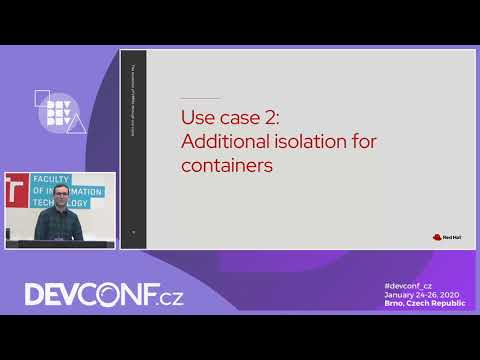
Defines lightweight VMs as small, customizable guests with tiny footprints and fast boot, and shows concrete implementations: Firecracker (Rust, crosvm‑based, static binary) and QEMU microvm (microVM machine type, ~60 ms boot on Linux, ~3 ms on an OSv unikernel). Explains why dropping ACPI/PCI simplifies devices and speeds boot, demonstrates a QEMU microvm implementation, and surveys upcoming features like virtio‑mem hotplug, SEV memory encryption and Enarx HW TEEs. Results show tradeoffs: Firecracker minimizes footprint, QEMU provides more features and flexibility.
AI-written summary · about
chapters (17)
- 0:00Introduction
- 0:23Classification
- 1:17Physical resources
- 2:44Lifecycle
- 3:15Traditional VMs
- 5:43BMS
- 7:56firecracker
- 9:51qmu
- 10:54firecracker vs qmu
- 11:32qmu vs firecracker
- 12:16qmu for containers
- 13:20qmu for telegram
- 14:41cockblock
- 16:47Trusted execution
- 17:14Be in the spirit
- 18:36Conclusions
- 20:00Questions
related talks
 20mFirecracker: Lightweight Virtualization for Serverless Applications
 27mServerless MicroVMs for Containerized Applications
 15mSabre: Hardware-Accelerated Snapshot Compression for Serverless MicroVMs
 18mUnikernels for Serverless Computing
 23mCrack the FaaS Cold Start and Scalability Bottleneck
 33mLanguage Runtimes for the New Cloud Era
 44mUnikernels and Hyper Elastic Clouds
 34mLook ma, no OS! Unikernels and their applications