Low-level RASP: Protecting Applications Implemented in High-level Programming Languages

summary
A low-level RASP hooks native entry points (JVM native call, system.load/native library loader, Node/V8 native APIs, PHP/Zend and Python C APIs, Ruby C API) and samples HPL stacks from native space without expensive FFI to do fast, frame-range stack matching and rule checks. Language-independent engine (Rust) plus tiny language bindings (≈1k C lines per language) let operations scale: 600+ binaries verified across Java, Node.js, PHP, Python and zero failures for a year in deployed tests.
AI-written summary · about
chapters (11)
- 0:00Introduction to low-level RASP
- 1:14RASP vs. WAF and HIPS
- 3:40Bypassing RASP defenses
- 6:17Performance challenges
- 8:37Designing a new RASP system
- 12:22Unified architecture
- 14:15Key security features
- 17:32Overall system integration
- 21:03Technical implementation
- 27:57Demonstrations
- 31:19Results and conclusion
related talks
 49mFixing the Unfixable: Solving Pervasive Vulnerabilities with RASP
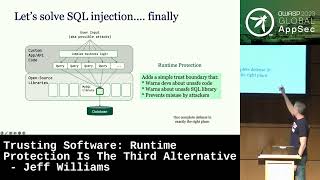 59mTrusting Software: Runtime Protection Is The Third Alternative
 45mAbusing Performance Optimization Weaknesses to Bypass ASLR
 43mJumpstarting Your DevSecOps Pipeline with IAST and RASP
 50mUsing language-theoretics and runtime visibility to align AppSec with DevOps
 53mAndroid: He protec, but he also attac
 32mDon't Get Owned by Your Dependencies
 35mOn Securing Legacy Software Against Code-Reuse Attacks