Making Data Scientists Productive in Azure

summary
Lists concrete mappings: use Cognitive Services for quick sentiment and document extraction but expect limited customization and non‑English gaps; use ML.NET to keep C# code and export TensorFlow models; use Azure Machine Learning for Python SDK, experiment tracking, MLflow integration and deployment to AKS/ACI/IoT Edge; use Azure Databricks + Delta Lake for scalable Spark ETL and time travel for model reproducibility. Notes on limits: 10 GB studio cap, cluster termination quirks, and cost tradeoffs for interactive clusters.
AI-written summary · about
chapters (14)
- 0:00Introduction
- 1:06About me
- 10:36Jupiter Notebook
- 14:49Machine Learning Studio
- 18:59DataBlowing
- 19:25Compute targets
- 20:44Deployment targets
- 22:54Summary
- 24:10Inside Data Bridge
- 26:43Databricks
- 28:29Data Science Virtual Machine
- 29:12Data Science Summary
- 30:34Machine Learning Services
- 31:49Key Benefits
related talks
 01h 01mAI and ML imbedded in Azure Data Platform
 58mDeep Learning in Microsoft Azure: CNTK, CaffeOnSpark and Tensorflow
 01h 01mStreams, lakes and oceans – working with on big data with Azure ML
 30mData & AI platform components in Azure
 49mAutomated Machine Learning on Azure
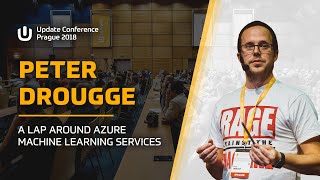 43mA lap around Azure Machine Learning services
 24mDon't want to miss out on the AI wave?
 51mTaking Models to the Next Level with Azure Machine Learning