Improving Education and Learning in India and Beyond
summary
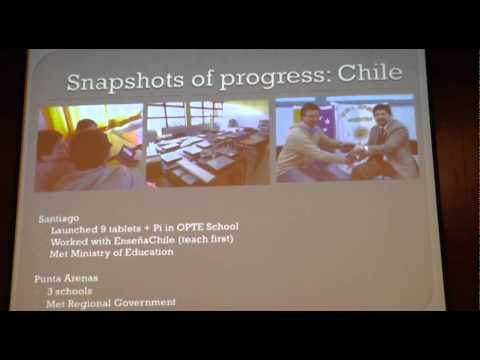
Shows concrete pilots: 12 Kenyan schools plus sites in India and Chile run offline content on Raspberry Pi clusters and donated Nexus 7 and Kindle devices powered by small solar panels, serving up to 25 concurrent video channels from a $100–$150 kit. Reports list 41 language translations, 1,322 UI phrases handled, and surviving 45°C desert use. Problems include frequent 64 GB SD card failures and theft risk, but iterative cycles and monthly feedback prove the low‑cost stacks useful and reproducible.
AI-written summary · about
chapters (4)
related talks
 45mEnergy and Education Access for Remote Communities
 26mUsing MicroBlocks and Raspberry Pi Pico to introduce primary students to programming
 30mCome with me if you want to code: the PiNet
 33mDesigning hardware APIs to facilitate hands-on learning
 25mLet’s make local and accountable tech!
 22mBuilding Raspberry PI Supercomputers
 23mShiny New Toys
 26mMaking an Impact with Duct Tape