The Practical Automation Playbook

summary
A five-step playbook (pick goals, resources, tests, increments, metrics) shows how to make automation fast and sustainable: pick business outcomes not test counts, build the feedback loop first, and track failures so most are product bugs not automation or environment issues. Case studies: Cypress + TypeScript cuts a daily smoke run from 2.5 hours to 30 minutes; moving mobile tests into the app repos using Kotlin/Swift runs on PRs and survives six years; AI generators (Mabel, KAI and others) often emit many tests with no assertions.
AI-written summary · about
chapters (16)
- 0:00Introduction
- 1:28Automation challenges
- 3:14Five-step framework
- 4:19Picking automation goals
- 6:01Choosing automation resources
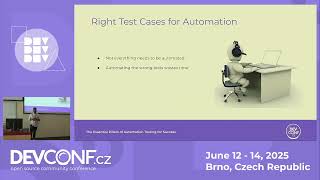
- 11:36Tests worth automating
- 14:03Building automation increments
- 16:08Tracking automation metrics
- 18:58Client automation journey
- 21:02Pilot projects lessons
- 24:11Tool evaluation process
- 26:19Critical automation pivot
- 27:22Current automation status
- 28:23Automation tool reflections
- 29:48Key takeaways
- 31:30Q&A
related talks
 44mThe Test Automation Blueprint: A Case Study
 21mThe Essential Pillars of Automation Testing for Success
 18mEffective Test Automation Framework Design
 53m20 QA Best Practices to take back to your workplace
 44mAchieving Excellence: The Path to an Impactful Test Suite
 13mThe Automation Firehose Be Strategic and Tactical
 46mSoftware Devs in Test Automation - Dream or Reality in Agile Software Dev?
 55mShifting the Testing Role Pendulum