Investigating Traffic Effects of Control Transitions in Level 3 Conditional Driving with SUMO

summary
SUMO motorway simulations model Level 3 takeover requests with a calibrated Berlin corridor and show that even successful control transitions raise time headways, cut capacity, and increase surrogate-safety events; notable capacity loss begins at 10–15% market share and travel times inside the ODD rise 20–60% under unmanaged operation. A managed takeover-timing scheme reduces but does not eliminate losses, safety measures (using TTC and modified deceleration rate) change by up to a factor of five with management.
AI-written summary · about
chapters (11)
- 0:00Level 3 conditional driving research
- 1:03Why level three automation matters today
- 3:50Vehicle automation levels
- 4:30Control transitions in level 3
- 7:42SUMO takeover simulations
- 10:12Traffic capacity impacts of transitions
- 13:19Berlin motorway case study
- 15:03Traffic safety during transitions
- 17:09Efficiency trade-offs in ODD zones
- 20:00Key takeaways and future work
- 21:25Closing remarks
related talks
 14mAnalysis and Modelling of Road Traffic Using SUMO to Optimize the Arrival Time of Emergency Vehicles
 16mAutomated Calibration of Traffic Demand and Traffic Lights in SUMO Using Real-World Observations
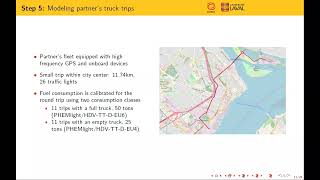 17mSignal priority for improving fluidity and decreasing fuel consumption
 19mSensor-based Flow Optimization on connected real-world intersections via a SUMO Feature Gap Analysis
 14mThe state of Bicycle Modeling in SUMO
 13mThe Effects of Route Randomization on Urban Emissions
 15mSUMO and the Transportation GeoXchange (TGX)
 21mChallenges in Reward Design for Reinforcement Learning-based Traffic Signal Control