The real project of AI ethics
summary
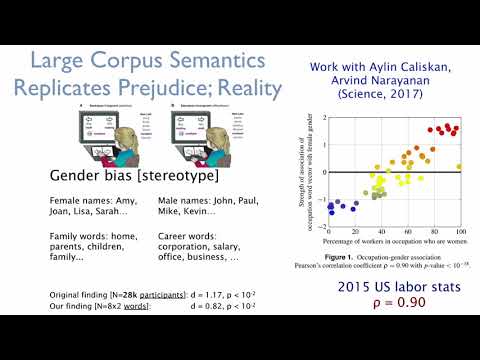
Uses artificially parsed word embeddings to show that semantic usage encodes social prejudice, reproducing human implicit bias patterns (faster associations of women with home, men with careers). Builds prejudice representations and plots them against US labor statistics, finding a 90% correlation between embedding bias and 2015 workforce proportions. Demonstrates that models mirror real-world distributions rather than inventing new threats, and that changing language and institutions shifts what models learn.
AI-written summary · about
related talks
 41mUsing AI to Build Fair and Equitable Workplaces
 40mResponsible AI Practices: Fairness in ML
 11mMachines of Love & Grace – Building Truly Inclusive AI
 37mKeynote: Ethical Machine Learning: Creating Fair Models in an Unjust World
 23mDeveloping an intersectional framework to analyze biases in artificial intelligence and deep neural
 30mFighting Prejudice in Artificial Intelligence
 38mSocial Implications of Bias in Machine Learning
 34m(Un)Ethical Machines? Why AI Bias Is a Problem and What to Do About It