The Only Constant Is Change: Lessons from a 25 Year SRE Career

summary
Fourteen concrete lessons cover career moves, hands-on fixes and what to learn next: reliability work centers on three skill areas people project technical, master one troubleshooting domain (single‑machine, distributed or socio‑technical), learn two to three programming languages and be conversant with others, practice on‑call pressure, and write the missing manuals. Examples include practical hacks like drop caches and the kernel STFU tweak and disabling Python GC plus controlled restarts. AI changes tooling and opens AI hardware ops jobs but does not remove the need for human coordination and judgment.
AI-written summary · about
chapters (9)
- 0:00Intro
- 6:11When you get offered a seat on a rocketship, take it
- 11:08Every SRE uniquely combines the three skill areas of People, Project and Technical. You need to be the best "you" that you can.
- 12:542. Managing/Influencing: Can you get groups of people to work together?
- 14:44Always have mentors, and always try to find people to mentor
- 20:49Project and incident management skills allow SRE's to turn "past mistakes" into "future successes"
- 22:55Over the course of your career you should expect to: 1. Master at least 2-3 programming languages 2. Become conversant in a new programming language every
- 28:16Master troubleshooting, under pressure, at least one of: 1. Single machine 2. Distributed systems 3. Sociotechnical systems
- 43:06Career changes to/from SRE are not "one way doors"
related talks
 29m10 Lessons Learned in 10 Years of SRE
 27m20 Years of SRE: Highs and Lows
 31mConfessions of an SRE Manager
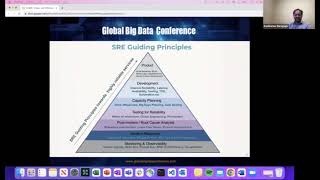 25mSRE Guiding Principles & Transformational Framework
 29mThe Curious SRE: Cultivating a Mindset for System Resilience
 06mWhat SREs can learn from summer camp
 51mThe Evolution of Site Reliability Engineering
 13mSucceeding as the Lone SRE in a Small Team