Earthquake Early Warning: Streaming Data to Reduce the Loss

summary
ShakeAlert is a coast‑wide system ingesting roughly a thousand seismic stations and already supporting automated actions like BART train slowdowns, pushing initial alerts within a few seconds (example: a 4.3 s alert after a M4.4 origin) and promising up to tens of seconds for big events. MyShake leverages smartphones as noisy accelerometers and has about 300,000 downloads with ~7,000 phones sending data on a given day; offline simulations detect small quakes (M1.7) but a recent real‑time backend glitch prevented one live detection. ShakeAlert using ~1000 stations MyShake: ~300k downloads, ~7k phones/day
AI-written summary · about
chapters (32)
- 0:00Intro
- 2:10Shake Alert vs My Shake
- 2:57Where is a warning useful
- 3:42The issue with alerting
- 4:16Earthquake Early Warning
- 5:08Napa Earthquake
- 5:30California Earthquake
- 5:52Taiwan Earthquake
- 6:05Crack in Road
- 6:46Mexico City
- 8:27San Andreas Fault
- 9:04Early Warning
- 11:19Reduce the Impact
- 12:07Amount of Warning Time
- 14:10Automated Response
- 14:58How do you get the warnings
- 16:46False alerts
- 18:13Prior work
- 20:43Technology exists
- 25:10Where is the system
- 26:48How does earthquake detection work
- 28:05Traditional approach
- 32:11triangulation
- 37:18Shake Alert
- 38:52How Does MyShake Work
- 42:44Network Detection
- 45:44No Seismic Data
- 46:32Shake App
- 52:28Largest Seismic Network
- 53:50Earthquake Detection
- 57:23Animation
- 58:31Building Monitoring
related talks
 22mHacking LTE Public Warning Systems
 28mMobile Disrupt pt.3
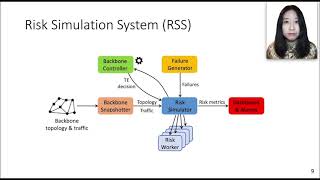 14mA Social Network Under Social Distancing: Risk-Driven Backbone Management During COVID-19
 23mquicker care for remote communities using FHIR & IHE mACM
 21mEAS Updates for Seafarers
 18mBayWatch: Practical Internet-Scale Topology Monitoring with Dynamic Bayesian Estimation
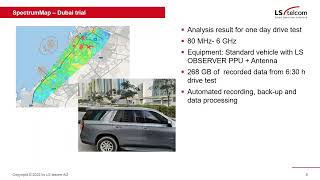 22mUsing big data from RF monitoring...
 14mEndangered Privacy: Large-Scale Monitoring of Video Streaming Services