Foundations for AI+Science

summary
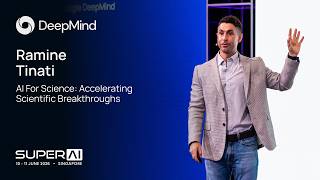
Introduces neural operators that map between continuous function spaces so models run at any resolution and learn from discretized samples, claims the 2021 AI weather model trained on 40 years of weather data runs tens of thousands of times faster than traditional solvers and enables calibrated probabilistic ensembles in ForecastNet3; reports AI-designed devices including a catheter that reduces bacterial contamination 100-fold and open‑source PyTorch libraries (Neural Operator library, Lean Dojo) that couple physics constraints and formal proof verification for science.
AI-written summary · about
chapters (13)
- 0:00Welcome
- 0:41Language limits for science
- 3:13Neural operators for physics
- 6:46Physics-informed learning
- 8:11Neural operators architecture
- 9:38AI weather models
- 11:48AI in medicine and chips
- 13:32Continuous modeling
- 13:54AI for math reasoning
- 15:40Hardware for AI training
- 17:29Low-rank gradient training
- 18:55Hardware-aware learning
- 19:16Future of AI and science
related talks
 49mModeling our future: Advancing climate research with AI
 14mAI for Science
 12mKeynote: What's New in AI
 25mConvergence of AI, Simulations and HPC
 28mAI vs Climate Change: Insights from the Cutting Edge
 24mKeynote: Next-generation frameworks for Large-scale AI
 18mAI Owes its Rebirth to Open Source and the Cloud
- 12mKeynote: What's New in AI