Media Mix Modeling:How to Measure the Effectiveness of Advertising

summary
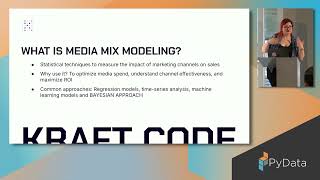
Explains a Bayesian-style marketing mix model implemented in Python and demonstrates lightweight_mmm on four years of weekly data with seven media channels, using saturation and adstock transforms and a geo‑hierarchical option. Shows training fit of R^2 0.9 and test R^2 0.62 with MAPE 23%, visualizes baseline vs media contributions, and produces an optimized budget allocation; compares to Meta’s Robin and recommends better data, hyperparameter tuning, and occasional lift tests.
AI-written summary · about
chapters (8)
- 0:00Media Mix Modeling intro
- 2:37What is MMM
- 8:00Data prep for MMM
- 11:40Modeling principles
- 17:30Demo: lightweight MMM
- 26:41Insights & budget optimization
- 27:21Improving model accuracy
- 29:09Summary & recommendations
related talks
 29mMedia Mix Modelling
 30mIs your marketing effective? Let Bayes decide!
 39mHow to Allocate Marketing Budget - Bayesian Approach to the Rescue
 27mEmpowering Business to make model-based marketing decisions
 27mUsing Causal thinking to make Media Mix Modeling
 29mDeciphering Sales Drivers at PepsiCo
 41mPyMC-Marketing: Customer and Marketing Analytics the Easy Way
 42mSolving Real-World Business Problems with Bayesian Modeling