Tricking Neural Networks : Explore Adversarial Attacks

summary
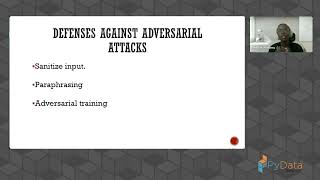
Shows concrete NLP and vision exploits: tiny character edits flip translations, swapped words flip sentiment, and pixel noise turns a cat into a dog. Attacks use gradient-guided maximization of loss on the input (white‑box) or query-based searches (score/decision black‑box). Demonstrates transferability across similarly trained transformer models, notes generation is compute‑expensive but a single success breaks systems. Defenses tried: input sanitization, paraphrasing, and adversarial training (most effective but can lower baseline accuracy).
AI-written summary · about
chapters (9)
- 0:00Introduction to talk
- 0:47What are adversarial attacks
- 2:11Examples in vision and LLMs
- 4:41Types of adversarial attacks
- 6:08How attacks are generated
- 7:10Why adversarial attacks matter
- 9:17Defenses against attacks
- 11:06Conclusion and key takeaways
- 12:11Q&A session
related talks
 21mTricking Neural Networks : Explore Adversarial Attacks
 21mAdversarial Attacks
 38mUsing adversarial samples to robustify your Neural Network Models
 36mAdversarial Attacks on Deep Learning
 35mHacking AI Systems: How to (Still) Trick Artificial Intelligence
 46mA Short Introduction to Hacking Artificial Intelligence
 44mAdversarial attacks on deep learning models
 36mAdversarial Machine Learning: How Secure Is ML?