Adversarial Machine Learning: How Secure Is ML?

summary
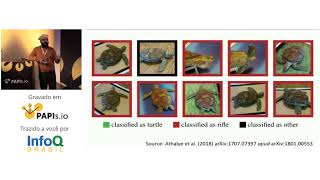
Survey of attacks and defenses for image classifiers with concrete claims and tools: adversarial examples (evasion) use minimal pixel perturbations that transfer and persist after print–scan, often found with Fast Gradient Sign and stronger CW/iterative methods; backdoor poisoning embeds triggers with as little as 1% poisoning and achieves up to 99.5% trigger rate; pruning can remove backdoors (digits: prune ~70% neurons, traffic signs need ~95%); defenses tested with Adversarial Robustness Toolbox include adversarial training, input preprocessing (spatial smoothing), and watermarking for model theft verification.
AI-written summary · about
chapters (17)
- 0:00Introduction to talk
- 1:06Machine learning workflow
- 3:55Adversarial machine learning overview
- 5:40Evasion attacks explained
- 8:27Adversarial example demos
- 10:15Real-world threats of evasion
- 12:48Defending against adversarial attacks
- 15:00Defense strategies overview
- 16:24Demo of defense mechanisms
- 19:13Poisoning and backdoor attacks
- 21:02How backdoors work
- 23:28Real-world backdoor scenario
- 25:52Defending against backdoors
- 30:00Confidentiality attacks
- 31:49Model stealing attacks
- 32:55Model watermarking defenses
- 35:04Conclusion and Q&A
related talks
 36mAdversarial Attacks on Deep Learning
 28mSecurity of Machine Learning
 53mSecurity of Machine Learning Systems
 20mMachine Learning Attacks – A New Era of Security Epidemic
 46mA Short Introduction to Hacking Artificial Intelligence
 21mAdversarial Attacks
 35mHacking AI Systems: How to (Still) Trick Artificial Intelligence
 02h 13mUnderstanding Security Threats Against Machine/Deep Learning Applications