Crowdsourcing the future
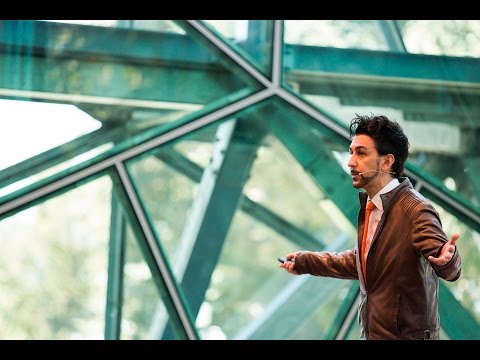
summary
Claims a crowdsourced build of Hyperloop Transportation Technologies with 520 scientists from 42 countries contributing part‑time for stock options, partnered by AECOM, Microsoft, Amazon, NASA, SpaceX, Tesla and universities. Describes a vacuum‑tube maglev: capsules of 28 people at ~1,200 km/h, one tube capacity ~3,400 people/hour (24 million/year), solar/wind/regenerative power net positive, pylon mounting that survives earthquakes, and integrated first‑mile self‑driving links. Promises a full‑scale Quay Valley / five‑mile I‑5 test and claims far lower capital cost than proposed high‑speed rail.
AI-written summary · about
chapters (10)
- 0:00Introduction and overview
- 2:23What is the Hyperloop?
- 4:15Building the Hyperloop
- 6:10Technical innovations
- 9:09Sustainability and efficiency
- 12:37Design and comparisons
- 16:11History of high-speed travel
- 18:42Crowdsourcing innovation
- 21:32Implementation and future
- 23:31Competition and conclusion
related talks
 26mPitch final
 26mWorld after Capital
 12mBuilding a 10 person unicorn
 19mSpace won't be the final frontier
 20mCollision 2015 - Tim Draper of DFJ Venture, Mood Rowghani of KPCB & Steve Bertoni of Forbes
 43mFifty Founders Battle: The 7 final pitches
 39mAccelerating Clean Tech
 17mRocket Science 101: Creating Low-Cost Access to Space