Linux Storage System Bottleneck for eMMC/UFS

summary
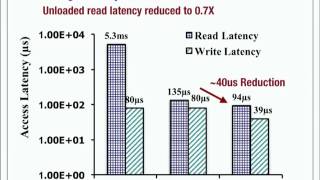
Measured with fio, Ftrace and blktrace on embedded boards (Zynq, Jetson TX1, HiKey960), the study breaks I/O into user, VFS/block, host driver and device time and shows software dominates small I/O. Examples: a 4KB random write spends 88% software overhead on an older Cortex‑A9 board and ~74% on a TX1; normalizing devices, NVMe reduces stack overhead (one‑thread 4K random ~34% lower, ~25% higher system throughput for 128KB sequential) and scales far better because NVMe supports much larger queue depths than UFS.
AI-written summary · about
chapters (7)
- 0:00Start
- 0:31Outline
- 2:44Goals of our project
- 7:48Methodology
- 27:57device access times
- 31:39UFS queue limitation
- 35:53Summary
related talks
 41mFinding the Best Block Filesystem for Your Embedded Linux System
 25mPerformance Analysis of NVMe SSDs and their Implication on Real World Databases
 50mOverview of the Linux Storage Stack
 27mPreview: Storage
 16mZNS: Avoiding the Block Interface Tax for Flash-based SSDs
 47mEnabling Large Block Size devices in Linux
 25mHigh Performance NVMe Offloading in SPDK Using the New vfio-user Protocol
 37mLarge Block I/O for Linux