Debugging Without Borders

summary
Remote debugging focuses on concrete tactics: use strace and tcpdump for runtime traces, nmap/traceroute for remote probes, and logs plus long‑term graphs to spot trends. A monitoring demo shows a system serving 560,000 requests per minute with a spike to ~2s and a surge of 503 errors tied to mobile collectors. Practical improvisation matters too—creative fixes like a toothbrush and wire for stuck bolts illustrate thinking with available tools rather than vague process talk.
AI-written summary · about
chapters (14)
- 0:00Introduction
- 1:14Collaborative troubleshooting
- 2:37Debugging goals
- 5:03Smart questions for answers
- 9:12Audience and assumptions
- 11:40Debugging tools
- 15:51Debugging with New Relic
- 21:51Remote debugging techniques
- 28:36Physical diagnostics
- 30:25Firewall and proxy issues
- 32:12Minimal information demo
- 34:16Debugging best practices
- 35:41Forensic toolkit
- 36:26Q&A
related talks
 38mDebugging Embedded Linux
 43mDebug Like a Scientist!
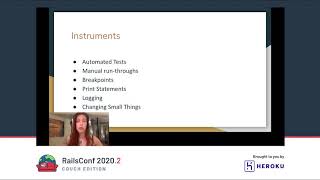 20mDebugging: Techniques for Uncertain Times
 13mDebugging debugging; why we must approach debugging differently
 36mDebugging War Stories & Strategies to Survive
 01h 05mBack To Basics: Debugging Techniques
 36mDAAS: Debugging as a skill!
 33mGetting Unstuck: Using the Scientific Method for Debugging