How to Build the Next Wave of Graph-Based Agentic AI

summary
Claims a Text2Graph failure mode and shows a fine-tuned Perseus pipeline that produces ontology-driven graphs with “99% output validity” and 100% ontology-compliant nodes and edges after extraction. Demonstrates one-click ontology generation, automated graph population, and Neo4j/OrientDB deployment; draws on a public leaderboard comparing GPT-4/Claude and smaller tuned models and reports lower latency (seconds down to milliseconds) and higher entity-extraction F1. Also shows a GraphRAG + natural-language-to-Cypher flow where agents run multi-step (up to ~10) back-and-forth queries for verifiable results.
AI-written summary · about
chapters (15)
- 0:00Introduction and overview
- 1:07EU AI Act compliance challenge
- 2:32From raw data to knowledge graphs
- 3:58Building ontologies for agents
- 5:21Ontology visualization and validation
- 7:03Automated graph population
- 8:05Model benchmarking for text-to-graph
- 9:07Deploying agents on OrientDB
- 10:29Natural language to Cypher queries
- 11:34Advanced agent interactions
- 12:38MCP server integration
- 13:42Drag-and-drop compliance analysis
- 15:07Multi-step agent reasoning
- 18:5820-minute workflow summary
- 20:02Q&A session
related talks
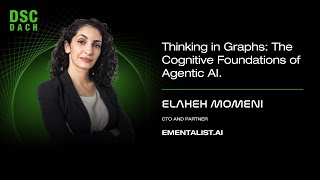 01h 26mThinking in Graphs: The Cognitive Foundations of Agentic AI
 08mHarness Graph Power With Agentic AI: An Insights Discovery Use Case
 28mAgentic GraphRAG: Multi-Agent Knowledge Graph
 33mSmarter Industrial Fault Diagnosis with Knowledge Graphs and Large Language Models
 01h 17mGraph Database and Retrieval Augmented Generation
 29mAgentic GraphRAG: Multi-Agent Knowledge Graph Construction for Research Teams
 30mPerformant GraphRAG Improving Neo4j to Drive Autonomous AI ...
 35mGraphRag in Action: Revolutionizing Fraud Detection Techniques