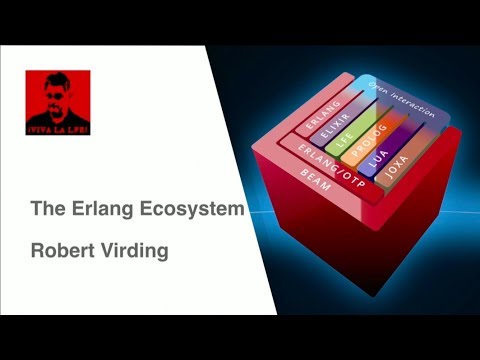
The Erlang Ecosystem
summary
Erlang targets systems that must never stop: the BEAM VM provides preemptive schedulers and transparent SMP and the runtime runs millions of lightweight processes with asynchronous mailboxes. OTP supplies supervision trees and hot code loading so modules undergo hot code swapping and restarted workers recover without full shutdown. Examples include a 2,000-entity simulator demo showing live code reloads, process introspection with observer, and how synchronous calls can deadlock many processes.
AI-written summary · about
chapters (26)
- 0:00Start
- 3:27Timing Constraints
- 7:02Process Isolation and the Error Handling
- 10:06Sequential Language
- 10:40Concurrency
- 11:19Error Handling
- 12:21What You Need To Build Robust Systems
- 12:50Supervision Trees
- 13:33Cleaning Up
- 15:24Generic Behavior
- 17:40What Is the Beam
- 23:23Extend the System
- 25:02Native Languages
- 29:54Standard Data Types
- 30:24Records
- 33:37Non Native Languages
- 38:23Standard Prolog
- 39:12Ports
- 40:27C Nodes
- 41:03J Interface
- 41:44Why Choose a Native Language
- 49:00Rabbitmq
- 51:20Can You Upgrade the Beam and the Rowing System
- 53:35Observer
- 54:28Load Charts
- 54:46Memory Usage
related talks
 51mThe Erlang VM or How I Started Loving Parallel Progamming
 42mThe Soul of Erlang and Elixir
 10mBack to the Future
 50mA Peek Inside Erlang's OTP
 31mHow does fault tolerance work in Erlang
 52mConcurrency Oriented Programming in a Modern World
 39mConcurrency Oriented Programming In A Modern World
 26mErlang on Xen: Redefining the Software Stack