“To define the rule -- why you should go open source"
summary
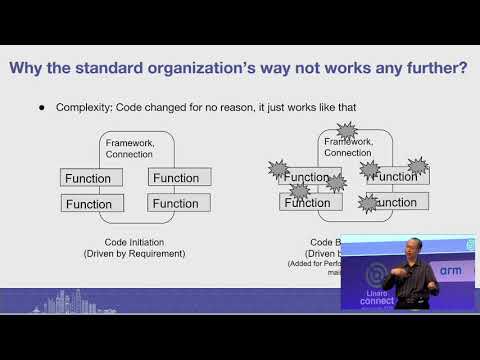
Argues that organizations must contribute code to steer the ecosystem rather than merely “taste” it, because private forks become long‑term burdens; cites GSM MSC at ~300k LOC versus modern phones at roughly 3M LOC to show scale. Recommends maintaining an internal branch for about 5–6 years and delivering ecosystem updates on a six‑month cadence (merge latest kernel/features into SDKs). Claims community leadership succeeds by enabling contribution not by duplicating distributions.
AI-written summary · about
chapters (9)
- 0:00Introduction to open source
- 3:05Names versus reality in open source
- 6:19Gradual design in open source
- 9:12Why contribute to open source
- 12:42Open source vs standards organizations
- 16:23Private branches and long-term support
- 18:12Yawkey’s open source strategy
- 21:09Community over control
- 22:39Conclusion and call to action
related talks
 29mOpen Source Contribution - How does it even work?
 55mOpen source is just about the source, isn't it?
 23mMaking the Business Case for Contributing to Open Source
 27mOpen Source: Supporting, Contributing and Evangelising
 13mHow can we truly arrive at "open-source everywhere"?
 01h 01mKeynote - Open source is just about the source, isn't it?
 54mWho Pays for Open Source? A Case for Open Governance & Enterprise Contributions
 31mCode It Forward: Making Your Mark in Open Source