Blame, shame and panic - how not to respond when things go wrong

summary
A concrete claim: build blameless teams by pairing technical safeguards (access controls used at an AWS consultancy) with specific behavioral tools — take a breath and pause, assume good intent, let them lead — so people fix problems instead of hiding them. Example: a real outage (pulling a channel off air) prompts panic then learning; use a checklist, a deferred blameless postmortem and empathy to repair systems and trust, and the approach demonstrably reduces repeat incidents.
AI-written summary · about
chapters (14)
- 0:00Managing mistakes at work
- 1:25Mistakes feel personal
- 3:31First mistake panic
- 5:40Brain’s fight-or-flight
- 8:29Learning resilience
- 8:50Manager reactions to mistakes
- 11:01Calm leadership
- 13:30Empower teams to fix
- 14:32Post-mistake check-ins
- 15:36Normalizing failure
- 17:03Blameless culture benefits
- 18:49Blame to accountability
- 20:38Compassionate leadership
- 21:43Teams that handle mistakes
related talks
 19mBlame, Shame and Panic - What not to do when things go wrong
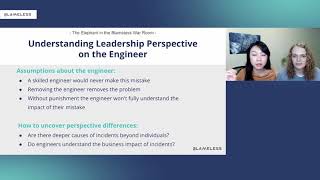 28mElephant in the Blameless War Room—Accountability
 23mWho to blame for all your problems
 28mBlameless Postmortem Culture
 20mBeyond Blameless
 31mThe blameless post mortem: how embracing failure makes us better
 37mIncidents are a new normal
 40mBuilding Resilience: How to Learn More from Incidents