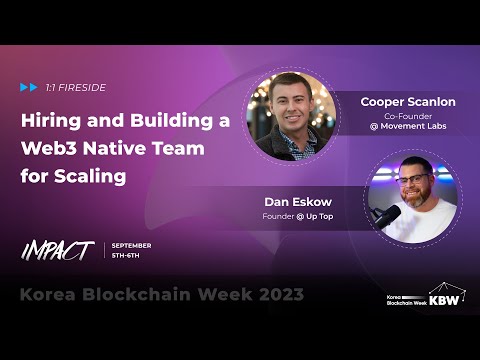
Hiring and Building a Web3 Native Team for Scaling
summary
A recruiter-first approach hires partners, not employees, for a flat, family-style startup that ships Move blockchain environments to other chains to solve the cold-start for a new language; claim is that democratizing Move delivers parallel processing and stronger security and the team already built a Move yield-aggregator as proof of concept. Screening prioritizes product questions and ecosystem experience, flags candidates who didn’t read the deck, and prefers compensation blended with equity and token alignment that scales cash later — summed up as be visionary, bring a portfolio, and drink the Kool-Aid.
AI-written summary · about
chapters (17)
- 0:00Building Web3 native teams
- 1:05Attracting early stage talent
- 3:57Vision and culture for candidates
- 6:02Interview questions for early stage
- 8:11Selling Movement Labs vision
- 10:20Overcoming founder stigma
- 13:50Screening non-traditional candidates
- 16:18Resume standouts in Web3
- 18:47Dropping out for Web3
- 22:36Hiring red flags
- 24:22Compensation mismatches
- 26:49Hiring technical vs non-tech
- 27:50Salary benchmarks early
- 28:31Scaling team structure
- 30:20Setting expectations
- 31:23Investors bet on team
- 32:05Management for Web3 startups
related talks
 29mYoung Talents: How To Find & Recruit The Best Ones In The Web3 Jungle
 37mKickstarting Your Web3 Career
 09mScaling Frontend Teams
 18mRethinking Team Building: how a 30-person Startup serves 50 Million Users
 53mAttracting Great Developers to Web 3.0.
 23mWhy the Move Ecosystem Is Onboarding Devs at Speed
 55mHow to build a kick-ass remote Scala team
 23mHow to hire the best for your startup