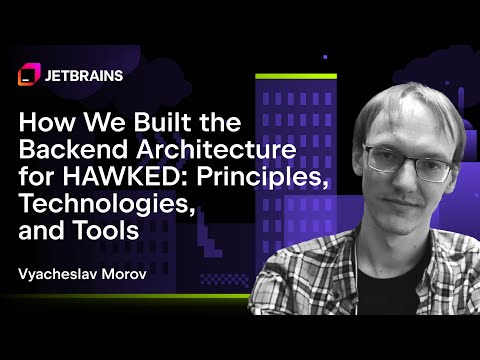
How We Built the Backend Architecture for HAWKED: Principles, Technologies, and Tools
summary
HAWKED backend uses C#, .NET, Orleans (actor model) and ASP.NET microservices, deployed on Linux via Nomad, with Redis for caching and Consul for runtime config. The actor system hits 1.5 million actors across 4–5 nodes and shows 20 ms average actor call latency; in-memory and persistent grain storage eases local dev. Client protocol is protocol buffers over WebSocket with a custom RPC shim. Observability uses Prometheus/Grafana/Loki/Tempo; matchmaking and leaderboards run as single-instance services.
AI-written summary · about
chapters (13)
- 0:00HAWKED backend intro
- 1:48Game backend challenges
- 7:14Backend operational needs
- 9:41Custom backend design
- 12:38Technical constraints and languages
- 15:12Orleans backend architecture
- 23:58Client-server protocols
- 27:09WebSocket and custom RPC
- 30:41Separating services from game logic
- 35:19Game data caching
- 38:11Global player state
- 39:13Deployment and observability
- 41:21Future plans
related talks
 53mHow do we build high‑load microservices
 40mActors in .NET, 2025 edition
 56mFrom Homogeneous Monolith to Heterogeneous Microservices Architecture
 26mWhat's your backend written with? JavaScript?!
 01h 02mPub crawling in Orleans: exploring the Actor model
 34mType-safe & high-perf distributed actor systems with Rust
 13mLow-Maintenance Backend Architectures for Scalable Applications
 53mPowering 100+ million daily users