An IoT security solution based on 10 years of experience in VoIP technology
summary
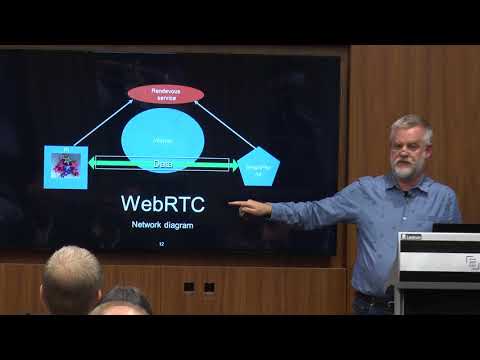
Claims that WebRTC’s end-to-end, peer-to-peer tooling maps directly onto IoT security and latency problems are backed by a working prototype called Pipe: a WebRTC-based stack with self-signed x.509 identities provisioned by QR or Bluetooth LE, pairing that removes usernames and passwords, and a data channel used for cameras, doorbells, meeting-room screens, sculpture control and a podcast player. Devices run on Pi/BeagleBone hardware, demos work upstairs, and measurements show 85% direct peer-to-peer connections without relays and zero passwords, closed ports reducing scanable attack surface.
AI-written summary · about
chapters (9)
- 0:00Introduction
- 3:15VoIP and IoT security
- 6:51WebRTC lessons for IoT
- 11:29IoT architecture pitfalls
- 13:13Pipe: WebRTC-based IoT
- 17:27Secure device pairing in Pipe
- 21:45Pipe proof-of-concept
- 27:02Proxying insecure IoT interfaces
- 29:09Summary
related talks
 11mReal-Time Compromise: Investigating RTC Security in Consumer IoT
 50mWebRTC, Or How Secure Is P2P Browser Communication? [BAD AUDIO]
 57mSecuring the last mile of IoT solutions
 46mWebRTC: Let’s Revolutionize Information Sharing in the Browser
 46mWeb Security Experts: Are you overlooking WebRTC vulnerabilities?
 35mBuilding Trust & Enabling Innovation for Voice Enabled IoT
 53mThe State of WebRTC
 54mSecurity in IoT, More an Attitude Issue than a Technical Challenge