Sounding out the web

summary
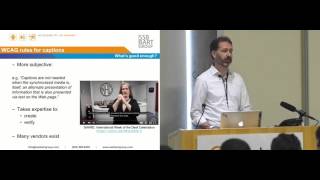
Practical checklist: always provide subtitles/captions, check and edit auto-captions (YouTube’s transcribe and auto-sync workflow lets you correct timing), keep captions tightly synchronised with audio, offer downloadable transcripts and searchable, highlighted text (BBC’s BOB indexes 2 million broadcasts), avoid autoplay audio or give a clear off control, and structure content with headings to reduce visual overload. Studies show 7.5 million UK subtitle users but only 1.5 million are deaf or hard of hearing, and even a small error rate collapses comprehension, so captions must be accurate.
AI-written summary · about
chapters (15)
- 0:00Start
- 3:04About me
- 4:43Disability? Impairment?
- 6:42What is 'accessibility, anyway?
- 7:20What's it like to be deaf?
- 9:53Language matters!
- 11:58Deaf and deaf: potato, potahto?
- 12:45UK stats
- 13:14Choices
- 14:24Effects 1: Spaces
- 16:07Effects 2: Information
- 18:06Accessibility rarely happens by chance
- 20:05What's great about the 'net?
- 23:03Recent examples
- 28:26WHICH ONE IS DEAF?
related talks
 07mQuality Captioning as Universal Access...
 45mAccessible Audio & Video
 30mIt's just captions, right? Why does video accessibility matter in the 21st century.
 38mDemystifying Captions
 24mAccessibility is more than just supporting screenreaders
 44mDesigning for deaf people, for everyone actually
 56mBeyond Colors and Captions: How to Provide More Inclusive Accessibility
 44mInclusive Content Strategy