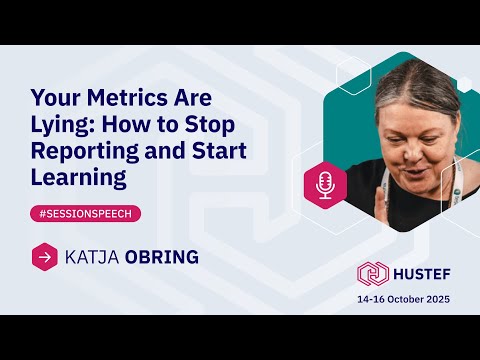
Your Metrics Are Lying: How to Stop Reporting and Start Learning
summary
Familiar metrics like test coverage, bug counts and cycle time often signal activity not impact; the QED framework insists on a clear question before metric, evidence from CI logs bug trackers git stats, and a tiny experiment that ties change to business effect. Examples include a reward system that inflates trivial bug reports, replacing raw counts with a measure hotfixes direct metric, or a concrete develop step such as add one test to each critical path story and follow it with a quick release confidence check.
AI-written summary · about
chapters (8)
- 0:00Misleading metrics intro
- 2:14Activity vs improvement
- 7:31From reporting to learning
- 12:06QED framework
- 16:23Meaningful vs vanity metrics
- 19:16Direct vs proxy metrics
- 22:25Actionable insights
- 24:48Summary & Q&A
related talks
 39mTest Metrics – a thread or a threat
 26mMetrics and Modeling – Helping Teams See How to Improve
 43mTo Measure or Not to Measure? That Is the Question
 14mEssential Metrics for the Quality Assurance
 20mHow to Communicate Metrics to Build Engagement
 31mMeasure it or it didnt happen
 46mEngineering Intelligence via Engineering Metrics
 35m"You Can't Miss What You Can't Measure"