Getting Real Value out of your Planning Efforts with Story Mapping

summary
Claims that story mapping replaces 1D backlogs for strategy by creating a visible two‑dimensional map of customer touchpoints (backbone) and prioritized epics, using cheap physical tools like Post‑its, glass walls or a door. Process requires 1–4 weeks prep, sessions every 1–3 months, and yields a walking skeleton/MVP above a drawn line; it exposes tradeoffs (each +50% scope multiplies cost/complexity) and aims to cut wasted work — note cited industry figures: ~60–90% of experiments fail and ~80% of IT cost is maintenance.
AI-written summary · about
chapters (37)
- 0:00Introduction
- 1:57Team
- 2:07Personal
- 3:02Agenda
- 3:19You are guinea pigs
- 3:39Quick rating
- 4:18Context of this talk
- 4:52Story point machine
- 5:31Fragmented list of great ideas
- 6:03It is a simple score!
- 8:07Backlogs are great!
- 9:00The new backlog is a map
- 10:07Story Mapping in short
- 13:38Get the right people
- 14:25Research domain
- 15:30Write known business needs
- 16:38If applicable
- 17:50Start outside-in
- 18:34Customer Journey touch points
- 19:23Where will we put our energy?
- 22:06Prioritize
- 23:16Tell the story / walk the map
- 24:03One target group at the time
- 27:15Walk the "MVP"
- 29:41What is the real risk?
- 30:44Remember
- 31:59Difficult but important
- 33:27A smile doesn't cut it
- 35:47A door
- 36:01Glass walls are great
- 36:11Even a dinner table
- 36:25It is just a direction!
- 38:24Keep it physical
- 39:32Visual and 2 dimensions
- 43:29Take-aways
- 43:45Questions
- 44:11Contact information
related talks
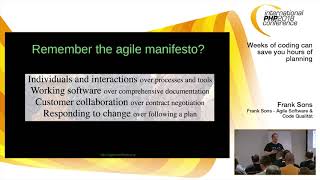 46mWeeks of coding can save you hours of planning
 49mHow to value a story?
 25mMaking big impacts via visual strategic planning
 24mAre You Really Delivering Customer Value?
 30mTurning stories into software
 38mFrom Conversation to Software
 18mNavigating the Dev's Journey: Crafting an Effective Roadmap for Success
 38mNavigating the Maze