Modern 2D Techniques
summary
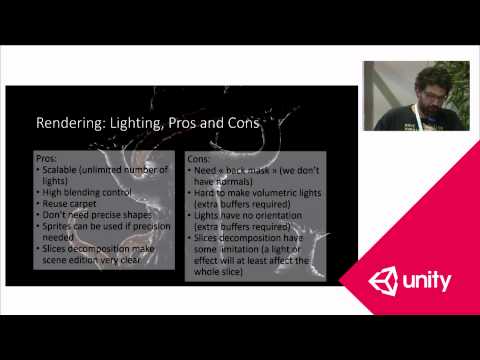
Unity pipeline built around ribbon and carpet spline tools generates level geometry from splines with automatic colliders; textures are auto-chopped by a folder-based PSD postprocessor so artists edit layers and Unity imports sprites and atlases. Sprite characters use a sprite-skeleton deformation system with in-engine animation and sprite swapping. Rendering uses four slice-based lighting with rim masks buffers (front/back lights combined) via custom render passes in Unity 4.6 beta. Tools run in editor, scale to big textures (4K parts) and already power the game in development.
AI-written summary · about
chapters (12)
- 0:00Intro
- 1:01Seasons After Fall
- 4:00Rayman Origins
- 4:54Asset Store
- 6:50Ribbon
- 7:43Textures
- 11:20Carpet
- 17:02Ribbons
- 19:29Animation
- 21:25Rendering
- 38:44Bonus
- 39:49Questions
related talks
 01h 02mCreating 2D Worlds using Unity's upcoming 2D Tools
 11mNew 2D Tools in 2017.2
 34m2D or not 2D
 43mUnity 2 6 Introduction
 13mNext level rendering and graphics & Book of the Dead by Unity's Demo Team
 01h 04mAsset Pipeline Customizations
 43mScaling Indie - Making Bigger Games With Unity
 20mStudio Speaks: The Reality of AI Adoption in Games