Scalable Testing Strategies

summary
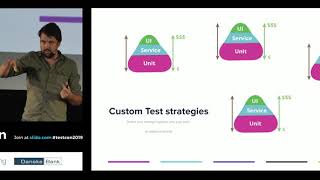
Introduces a five-layer testing pyramid that separates unit, component, feature, application and release-candidate tests, recommends matching test size to scope, and targets ~25 minute build+test CI times (10 minutes possible with heavy caching). Describes Compose preview screenshot tests (alpha 7) that got a 10x discovery/render speed-up, Robolectric for JVM UI tests, Gradle Managed Devices with snapshot validation reducing errors ~75%, and a new Journeys with Gemini natural-language end‑to‑end testing system.
AI-written summary · about
chapters (16)
- 0:00Introduction
- 1:27Traditional testing pyramid problems
- 2:54Five-layer testing pyramid
- 7:05Unit and component tests defined
- 8:08Feature and app tests
- 8:49Release candidate tests
- 9:53Test infrastructure and CI
- 11:17Screenshot testing pitfalls
- 14:27Compose previews tool
- 19:47Robolectric for UI tests
- 22:19Screen size testing
- 25:11Flakiness prevention
- 28:21Gradle managed devices
- 30:49Gradle device optimizations
- 31:10Journeys with Gemini
- 34:18Conclusion
related talks
 22mBuilding a Test Strategy that Scales
 58mTesting Strategy - New Model, Better Outcomes
 38mThe Testing Pyramid – What does it mean for Android?
 20mThe Road to Continuous Testing
 01h 05mMicrotesting
 24mSupercharging CI: Test Suite Optimization for Speed, Stability, and Savings
 53mTransforming testing methodologies: From manual to robust strategies
 42mThe Holy Trinity of UI Testing