Shaping the Future of Travel with DevOps and Cloud
summary
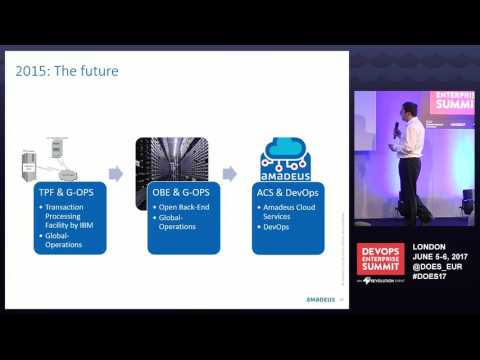
Amadeus runs ~37 PB of storage across ~16,500 devices, serving ~49,000 end-user transactions/sec and ~47 billion SQL executions daily while doing ~5,500 IT changes and ~540 app loads monthly at 99.99% availability. The company is migrating a legacy SOA stack to an Amadeus Cloud Service built on OpenShift/Kubernetes/Docker, integrating Control‑M for 300,000 daily jobs as “jobs as code,” reorganizing ~2,000 people into DevOps teams, and already running production services (thousands TPS) in hybrid cloud.
AI-written summary · about
chapters (11)
- 0:00Introduction to Amadeus
- 0:28Amadeus operational scale
- 4:32History of Amadeus tech
- 8:37Need for DevOps in travel
- 12:22Benefits of DevOps
- 14:24DevOps challenges
- 17:59Cloud architecture benefits
- 19:49Technical implementation
- 26:03Current cloud status
- 27:18Key takeaways
- 28:59Q&A session
related talks
 26mCase Study of Success
 28mAmtrak's cloud adoption is riding the high-speed rail
 28mDevOps at American Express
 14mAccelerating Innovation at Expedia with OpenStack
 57mCreating value from confluence of technology forces (PRT250)
 30mEverything as Code
 36maccelerates its modernization journey with
 15mJourney to Hybrid Multi-Cloud