Hacking the Human Body and Brain
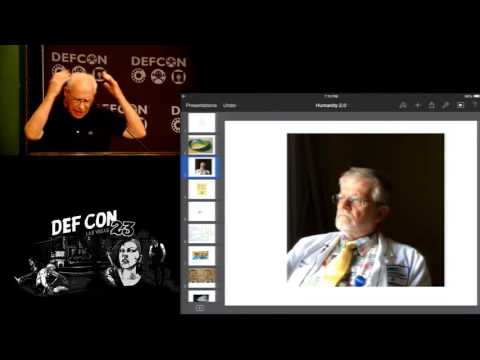
summary
Claims and demos pile up: labs use transcranial pulsed ultrasound to write and erase memories and to evoke motor responses in mice without implants; gene therapy gives adult monkeys new color vision; retinal prostheses and tongue-based displays route sight through implants and electronics; 3D‑printed tissues and organs progress toward transplantable bladders and livers (sheep livers reach ~80% human cells); insects and sharks are remote‑controlled; attempts at brain‑to‑brain organic networks and memory transplantation in rodents succeed in the lab; consumer devices like THYNC attempt mood modulation.
AI-written summary · about
chapters (18)
- 0:00The accelerating future
- 1:41Interconnected humanity
- 4:29Future realities
- 7:15Biohacking as hacking
- 9:39Neurotechnology impacts
- 12:41Enhanced soldier capabilities
- 14:37Memory as a weapon
- 17:31Dual-use hazards
- 20:16Redefining identity
- 23:13Sensory expansion
- 26:21Neural interfaces
- 31:22Prototyping with animals
- 35:02Cybernetic organisms
- 37:09Human-animal chimeras
- 40:01Brain networks
- 43:02Revolutionary advances
- 45:16Memory manipulation
- 49:44Defining humanity 2.0