Regulatory Incentives Towards Decentralization

summary
Argues that regulatory choices act like taxes or subsidies: avoiding costly compliance makes open blockchains more competitive than legacy finance, while state money‑transmitter rules force exchanges to buy 53 state licenses to operate. Uses securities law tools — notably the Howey test — and AML doctrine (citing FinCEN May 2019 guidance) to show who is the least‑cost avoider. Proposes federal licensing or passporting as fixes, warns that treating every node or miner as an MSB is infeasible, and notes millions of SARs already filed.
AI-written summary · about
chapters (24)
- 0:00Introduction
- 2:00Incentives from government
- 6:20Regulatory taxes
- 7:00Regulatory incentives
- 8:15Unnecessary laws
- 9:45State money transmission licensing
- 16:28Pigovian Taxation
- 18:47The LeastCost Avoider
- 22:58The Avenue of Death
- 24:26Negative Externalities
- 25:52Malinvestment
- 26:34Protectionist vs Libertarian
- 28:05Negative Externality
- 30:46Money Laundering
- 36:48Classification Exercise
- 42:51Tokens
- 47:36Intangibility
- 50:24Utility Tokens
- 51:03Investment Expectations
- 52:45Bubbles
- 54:13Chokepoints
- 56:12Least Cost Avoider
- 57:20Regulators
- 57:44First Principles
related talks
 10mInnovation and Regulation. East vs West
 13mRethinking Decentralised Governance
 28mThe Balance Between Innovation & Regulation
 12mRegulation in the Blockchain Space: Navigating the Global Landscape
 21mGlobal Regulation in a Decentralised World: The New Paradigm - What to Expect?
 08mDeFi & Law: What Regulation Should and Shouldn’t
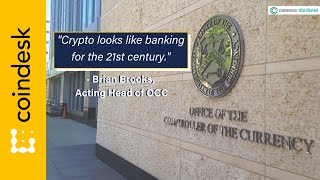 12mHow a Former Coinbase Lawyer Took the Helm of the U.S. Bank Regulator
 33mRegulation: Crypto Killer, or the Key to Its Future