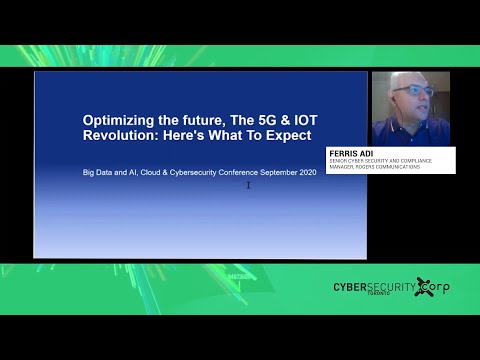
Optimizing the future: The 5G & IoT revolution
summary
Claims that 5G delivers 1 millisecond latency, supports up to 1 million devices per km, and pushes speeds toward “10 gigabytes” while enabling 25 billion IoT devices by 2025; it pairs network slicing and edge computing to run mission‑critical services and a demo of a connected ambulance with remote ultrasound and haptic control. Major risks: many IoT messages lack encryption, IoT accounts for 78% of malware despite 16% of traffic, complex virtualized cores and supply chains raise new attack surfaces. Recommended mitigations: zero trust, automation, hybrid cloud and privacy‑by‑design.
AI-written summary · about
chapters (11)
- 0:00Introduction and disclaimer
- 1:49Speaker introduction
- 2:095G overview and technical aspects
- 8:40Network slicing in 5G
- 13:13Edge computing with 5G
- 17:515G use cases and applications
- 23:535G in healthcare opportunities
- 30:18Business implications and IoT challenges
- 41:555G security threats and mitigations
- 44:45Privacy and data management in 5G
- 49:19Summary and Q&A
related talks
 31mSmall Cells and Smaller Devices: Using 5G to Solve IoT Device Security
 33mThe IoT for Real - Beyond Simplistic Thinking and Models
 21mKeynote: Future of IoT: A VC Perspective
 40mWhy 5G Demands a New Approach to Cybersecurity
 31m20/20 Security Vision: Managing Digital Risk in the Era of IoT
 29mUnleashing Technologies that will Transform IoT
 17mKeynote: Inter-dependence of IOT & Network
 47mTrend Micro's VP of security research reveals the latest IoT threats and how to combat them