How organizations can put their data to work and build 10,000 responsible, human-centric AI models

summary
Argues companies must internalize AI capability rather than outsource, combining a Dataiku-style platform, contextualized training, certification, a branded user portal, automated impact tracking and lighthouse projects to scale to 10,000 responsible AI models. Describes a five‑step chain: executive decision, investment, joint strategy, user pipeline and peer-to-peer chain reaction. Gives a concrete pharma outcome: decades‑long program producing tens of thousands of models, thousands of users supported by roughly 50 data scientists, and measurable value fed to CFO/CIO dashboards.
AI-written summary · about
chapters (19)
- 0:00Introduction to 10,000 AI models
- 2:06Who is the speaker
- 3:51Why not outsource AI development
- 5:18Internalizing AI capability
- 6:21Executive commitment needed
- 7:23Investment in people and tech
- 8:27Building internal AI capability
- 9:11Executive support and monitoring
- 9:32Peer-to-peer chain reaction
- 10:16Running the transformation project
- 11:59Training and user pipeline
- 13:03User community and evangelization
- 14:47Lighthouse projects for buy-in
- 15:51Monitoring and reporting value
- 16:52User experience in transformation
- 18:55Executive value framework
- 20:20Pharmaceutical company case study
- 22:47Start now and take action
- 23:49Q&A session
related talks
 22mHow to operationalize AI
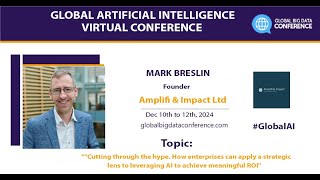 21mCutting through the hype. How enterprises can apply a strategic lens to leveraging AI to achieve ...
 29mScaling AI - Creating value with the application of AI
 37mThe AI Factor: The Blueprint for Intelligent Deployment
 11mSuccessful AI adoption
 23mEffective Integration and Responsible Use of AI Platforms Into Day-to-Day Analytics EffortsGenentech
 37mPanel Discussion: Developing with AI
 39mResponsible Applied AI at Scale