A Love Letter to Code – What Happens When We Stop Writing Most Of It Ourselves?

summary
Argues that AI doesn’t replace developers but amplifies existing weaknesses: lack of explicit rules, messy boundaries, and undocumented knowledge. Shows examples where competitive programming habits (quick throwaway code) clash with long‑lived production needs, and says teams must make rules explicit and modularize code so models can operate reliably. Presents AI as AI as abstraction layer that will write much code but still needs clear specs, reviews, and human-defined scope to produce correct, maintainable results.
AI-written summary · about
chapters (8)
- 0:00Introduction
- 7:14Clever code to maintainable solutions
- 15:24Why code becomes hard to maintain
- 17:10AI as code quality mirror
- 21:50Joy of coding and focus shift
- 26:03Writing to solving problems
- 28:59What we’ll miss and what matters
- 30:02Q&A
related talks
 32mComputer Programming Is Dead; Long Live AI-First Programming
 15mThe AI Shift: Rethinking the Developer’s Role in a Machine-Driven World
 20mWill AI Replace Coding or Improve It?
 42mA Developer's Search for Meaning: Thriving as AI Transforms Our World
 41mFuture of Programming: What’s Our Place in the World of Coding Machines?
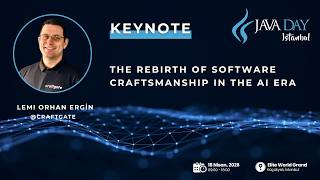 45mThe Rebirth of Software Craftsmanship in the AI Era
 01h 22mSoftware Abstraction in the Age of AI-Generated Code
 26mAl and Software: The Good, The Bad, The Scary