Solving Real-World Data Fetching Challenges with Next.js and TanStack Query: Case Study

summary
Front end needs birthdays for 5,000 users but backend only returns 1,000 per call, initial client does five parallel requests and receives ~2.3 MB responses with ~73% unused data causing slow loads and 429s. A Next.js API handler BFF aggregates the five calls, maps data and returns a tiny payload of 666 bytes, while TanStack Query provides caching, retries, prefetch/dehydrate and client recovery with server-side timeouts (e.g. 500ms–2.5s), turning multi-second loads into millisecond renders.
AI-written summary · about
chapters (22)
- 0:00Introduction
- 1:26Data fetching performance
- 3:11Pragmatic optimization
- 4:56Real-world suboptimal conditions
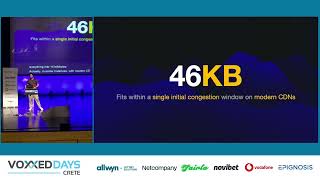
- 7:24TCP packet limit matters
- 7:46Next.js and TanStack Query
- 10:58API types and limits
- 12:42Problem statement and constraints
- 14:25Initial architecture flaws
- 17:13Demo: Unoptimized fetching
- 19:17Issues with initial approach
- 20:01Backend for Frontend pattern
- 22:47Optimized architecture with BFF
- 23:30Demo: Optimized fetching
- 25:35Ingress vs egress costs
- 28:22TanStack Query for UX
- 31:49Query criticality and resilience
- 33:14Server-side prefetching
- 35:21Prefetch logic in Next.js
- 37:49Demo: Server-side prefetching
- 39:55React reconciliation optimization
- 42:30Q&A
related talks
 45mSolving Real-World Data Fetching Challenges with Next.js and TanStack Query: A Pragmatic Case Study
 26mData Fetching Unleashed: Next.js, React Query and their BFF
 29mSolving Real World Data Fetching Challenges: A Pragmatic Case Study
 29mEfficient server state management
 24mHow Not to Use TanStack Query
 52mManaging Remote State in React
 22mFrom 3000ms to 300ms: Lessons learned from optimizing Tanstack ...
 30mOvercoming N+1 API Calls in React: Strategies for Efficient Data Fetching