Can you trust your AI?

summary
TrustyAI at Red Hat builds a toolkit (Cogito cloud and libraries) that emits per-execution inputs, outputs and local explanations, ties those to runtime metrics, and stores traces so decisions are auditable. It wires rule engines and ML (decision tables, trees, neural nets) into a pipeline with thresholds, notifications and dashboards for drift detection and bias cases (resume and gender examples). A Python binding is experimental, containerized deployment and scaling are implemented, and the system demonstrates live monitoring and alerting via runtime monitoring and Cogito cloud.
AI-written summary · about
chapters (8)
- 0:00Trusting AI systems
- 2:47Symbolic vs ML approaches
- 5:58AI in production challenges
- 9:10Black-box explainability limits
- 12:20Feature analysis and transparency
- 14:14Runtime monitoring for trust
- 16:40Monitoring behavior and outcomes
- 18:29Q&A
related talks
 46mCan you trust your AI?
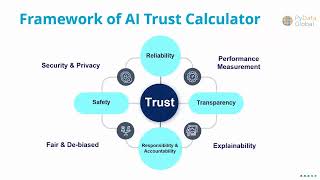 31mMeasurement of Trust in AI
 31mBuilding Trustworthy AI: Open Source Monitoring in Action
 28mTrusted AI – Building Reproducible, Unbiased and...
 11mKeynote: Trusted AI: Bringing Trust Back into AI through Open Source
 12mTrust and transparency of AI for the enterprise
 08mArchitecting Transparent AI Systems for Cloud-Native Environments
 07mKeynote: Trusted AI: Bringing Trust Back into AI through Open Source