Challenges in Mixed Reality
summary
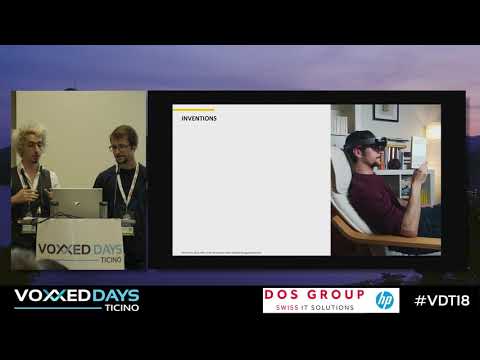
Swiss Post adapts Microsoft HoloLens to four real use cases including a sorting rack with ~200 compartments where initial colorful overlays caused users to hit the rack so the UI switches to thin borders, focus highlighting and a hands-free confirmation via gaze cursor after hand tracking fails. Development uses Unity + Visual Studio + Mixed Reality Toolkit with Vuforia for markers. Prototypes use OCR and image recognition via Azure Cognitive Services to read handwriting and detect objects. HoloLens limits: 580 g, 2 GB RAM, need >60 FPS, MDM/Azure AD for multiuser deployment, and a custom head strap replaces fragile hardware.
AI-written summary · about
chapters (9)
- 0:00Start
- 1:12Mixed Reality with Microsoft Hololens
- 3:26Cortana
- 6:17Sorting Rack
- 7:40Ui Ux
- 10:09Image Recognition
- 12:14To Consider When Designing Applications for the Hololens
- 18:48Leap Motion
- 19:04Intel Vault
related talks
 50mDeveloping for Mixed Reality with HoloLens
 01h 05mChasing holograms - the future of HoloLens development
 18mMicrosoft HoloLens for the Enterprise
 26mMixed Reality: Stranger Things have Happened
 46mHoloLens 301: Advanced Mixed Reality Development and Best Practices
 44mBetween Two Realities: Testing AR / MR
 10mMixed Reality check
 47mHoloLens 101: First experiences with holographic computing