SQL indexing: expressions, text fragments, JSON attributes and Top-N queries
summary
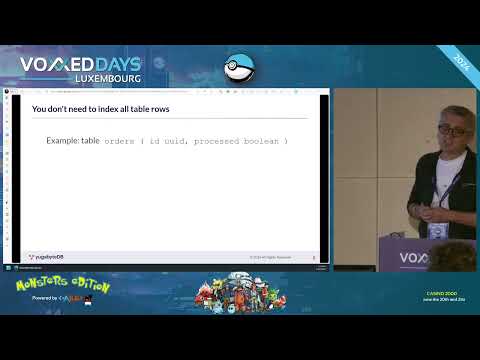
How to create SQL indexes that go beyond simple columns by indexing expression results, text fragments (e.g., substrings or tokens), and JSON attributes to speed up queries. It explains techniques for defining these indexes in SQL and shows how they improve performance for Top-N queries and other common query patterns.
AI-written summary · about
chapters (18)
- 0:00Introduction
- 1:07Why index searched values
- 3:34SQL indexes history
- 4:18Table indexes and optimization
- 6:45Top-N query indexes
- 10:20Partial indexes and use
- 15:16Covering indexes and included columns
- 23:39Avoid SELECT *
- 25:02Index order and pagination
- 28:55Expression indexes
- 32:06Text fragment indexes
- 35:55Trigram indexing
- 38:05JSON attribute indexing
- 43:02Top-N queries and pagination
- 46:34MIN/MAX per group
- 49:01Global indexing strategy
- 50:23Index management and maintenance
- 51:06Summary and Q&A
related talks
 45mSQL Indexing Beyond Simple Columns: Expressions, Text Fragments, Attributes J...
 46mSupercharge Your SQL with Indexes: a Practical Introduction
 25mThe Secret Life of SQL: How to Optimize Database Performance
 36mFor performance, go to page 5: Indexes
 01h 00mFlexible Indexing With Postgres
 49mIt’s Not Always About the Index: The Hidden Secrets of Query Performance
 53mAdvanced Indexing Techniques in PostgreSQL
 01h 30mMySQL Indexes, Histograms, Locking Options, and Other Ways to Speed Up Your Queries