Fortnite Trailer Pipeline

summary
A three‑minute cinematic trailer (six sequences, ~130 shots) is produced in ~20 weeks by teams of 5–20 using Unreal as the final‑pixel renderer; production enforces a 24 fps 41.6 ms budget, exports FBX/ABC and Olympic caches to Maya for animation, converts heads to GPU morphs, and upgrades game assets to ~185k triangles per hero character. Sequencer becomes the production hub, lighting stays dynamic for director control, exports are image sequences and conforming remains manual but successful.
AI-written summary · about
chapters (23)
- 0:00Introduction and context
- 2:58Real-time tech examples
- 4:15Fortnite trailer project
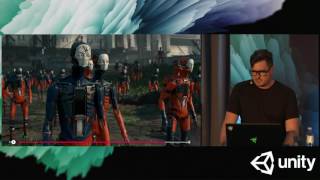
- 6:15Trailer screening
- 9:20Project goals and tools
- 11:33Traditional production phases
- 13:34Modern production workflow
- 15:27Methodology comparison
- 18:48Typical animation pipeline
- 21:14Fortnite project pipeline
- 24:21Pipeline differences
- 27:19Mocap and rough layout
- 29:09Sequencer and shot creation
- 30:33Refining and version control
- 32:37Maya integration
- 34:52Sub-level organization
- 37:35Asset enhancement
- 40:07Facial rigging and animation
- 42:28Animation outsourcing
- 44:36Lighting and scene polishing
- 46:54Effects and post-processing
- 50:44Final output and conforming
- 51:31Q&A session
related talks
 50mUnreal engine At the intersection of games and movies. On fire!
 27mA Rewarding Journey
 38mGame assets? For when and for what? Questions you should ask yourself
 47mThe Visual Technology of Gears 5
 19mSession:Using High-Quality Cinematics To Nail Your Pitch Without Breaking The Bank
 55mUsing a Real-Time Engine in Movie Production
 57mReal-time Cinematics & Storytelling
 53mAnatomy of an End-to-End Unity Animation Pipeline