An SRE Guide to Linux Kernel Upgrades
summary
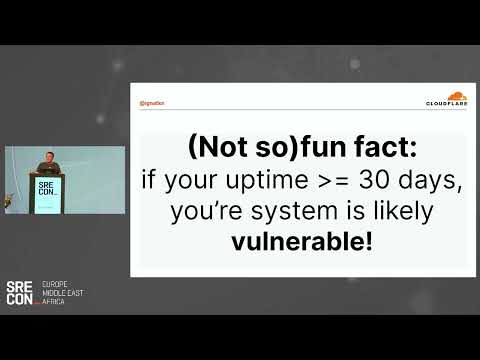
The kernel stable branch produces ~75 bugfix releases (example: 5.15 had 75), over half of them contain >100 commits and 55 of 74 releases carry CVE fixes; delaying updates grows the change delta (5.15.16→5.15.32 = 2,196 commits, delaying further →5,436 commits) and increases risk nonlinearly. Real gains appear: migrating 5.4→5.10 saved ~5GB RAM per server. Apply weekly bugfix releases, prefer an LTS major branch, rebooted rollouts in small batches with metrics and small reproducers for upstream fixes.
AI-written summary · about
chapters (6)
- 0:00The fear of kernel upgrades
- 3:27Risks of delaying updates
- 11:39Common industry anti-patterns
- 17:12Why kernel updates are safer
- 20:07Understanding release models
- 27:15Best practices for deployment
related talks
 34mAn SRE Guide to Linux Kernel Upgrades
 45mAn engineer's guide to Linux Kernel upgrades
 27mAn SRE guide to Linux Kernel upgrades
 53mAn engineer's guide to Linux Kernel upgrades
 41mChallenges Around Long-Term Kernel Maintenance
 34mHow to Decide the Linux Kernel Version
 35mKeeping the linux kernel secure across 10+ RHEL releases
 39mThe Life of a Kernel Bugfix