“Fearless Refactoring & the Art of Argument-Free Rust”

summary
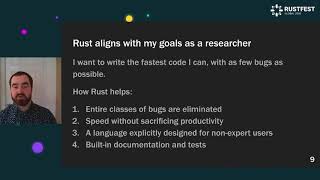
Claim: Rust’s type system plus compiler lints make refactors reliable enough to restructure tricky code with confidence. Example: a CPU‑bounding feature needed denoising math translated from GNU Octave that takes about two months to implement with magical constants; that code gets scrapped in favor of a far simpler test‑driven approach that pokes users to count work and succeeds. Practical rules given: fearless refactoring, avoid unwrap, match exhaustively, keep mutation scopes tiny and avoid unsafe so future maintenance is realistic.
AI-written summary · about
chapters (9)
- 0:00Introduction to Rust
- 1:20Project case study
- 3:48Hard problems in software
- 6:24Who are we coding for?
- 7:43Fearless refactoring
- 11:00Managing code weirdness
- 13:00Fostering collaboration
- 15:15Standardization process
- 18:56Conclusion and next steps