Exploring the History of a 12-year-old Rails Application

summary
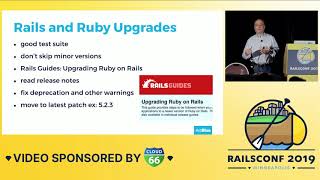
A 12‑year Rails codebase composed of seven repositories reveals a measurable history: a big spike in commits in 2015–2016 during an 18‑month acquisition and a seven‑month, stepwise Rails/Ruby upgrade from 2.3/1.8.7 to 4.2, with shared migrations and a single database causing coordination pain. The outcome is working: an API v4 that enforces API‑only integration, React SPAs, stronger code review, higher test coverage, and retirements of old services. Tools used: Git/GitHub graphs, Git log exports, CodeClimate and Chartkick.
AI-written summary · about
chapters (14)
- 0:00Start
- 1:59A PROLOGUE
- 10:17ONE CONTROLLER
- 12:52AS THE APPLICATIONS
- 13:22THE NUMBER OF APPS
- 24:41API V4 STARTED
- 27:08UX REFRESH
- 29:52GITHUB'S CODE FREQUENCY GRAPHS
- 31:54GIT LOG
- 32:36EXPORTING DATA
- 32:50VISUALIZING GIT COMMITS
- 34:16TALKING
- 36:09LESSONS AVAILABLE
- 40:20SOFTWARE
related talks
 46mAncient Rails
 32m2000 engineers, 2 millions lines of code: the history of a Rails monolith
 42mThe Past, Present, and Future of Rails at GitHub
 40mThe Life and Death of a Rails App
 35mTen years of Rails upgrades
 38mFrom 0.10 to 5.2. The story of a 13 year old Rails app
 26mKeeping the Rails Magic Alive After 18 Years
 31mTen Years of Rails Tutorials