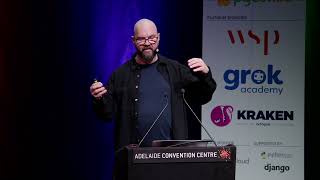
Can You Tell the Truth by Lying?

summary
Argues that precise truths often hide usefulness so pragmatic simplifications win: uses concrete Python examples — decorators (contrasting the lie decorator is a function that takes a function and returns a function with class, generator and async cases), a dataclass memoization pattern that avoids functools.cache signature issues, pandas index accessors and a painful group-weighted-summary example, Arrow zero-copy interoperability, and alternatives to metaclass plumbing like __init_subclass__ and class decorators — demonstrates ideas with live coding that actually works.
AI-written summary · about
chapters (7)
- 0:00Introduction
- 0:26Truth by lying meaning
- 8:12Said versus heard gap
- 12:06Pandas for analytics
- 23:26Self-delusion in teaching
- 31:13Finding truth without oversimplifying
- 32:18Q&A