How Deliveroo improved the ranking of restaurants
summary
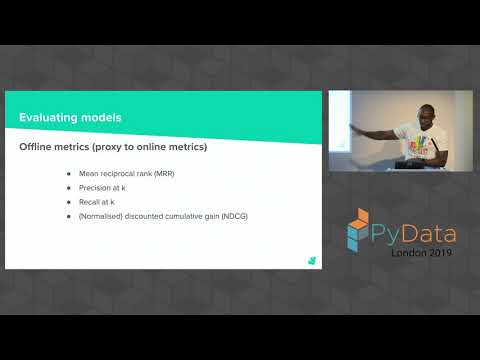
Deliveroo creates a point‑wise classification that scores each restaurant’s purchase probability, starts with a simple heuristic, moves to logistic regression and wide‑and‑deep nets, and serializes models with the TensorFlow estimator API for serving in Go. Offline evaluation uses mean reciprocal rank and information‑retrieval metrics, but A/B tests (user‑level randomization) reveal MRR gains don’t always lift session conversion or order volume. Pipeline uses CircleCI, Docker, S3 and a daily job runner; logging, feature checks and a ranking visualizer catch production mismatches.
AI-written summary · about
chapters (8)
- 0:00Deliveroo introduction
- 1:06Why ranking matters
- 3:13Restaurant ranking problem
- 8:07Heuristics to ML models
- 12:22End-to-end ranking pipeline
- 15:59Serving ranking models
- 24:05Lessons from production models
- 32:36Summary and future
related talks
 31mEverything in its Right Place: Optimising Ranking in Online Grocery
 27mOur experiments with food recommendations
 38mLearning to Rank journey at GetYourGuide: Our Logbook #bbuzz
 25mBetter search relevance using Learning to Rank at mobile.de
 24mOffline Ranking Validation - Predicting A/B Test Results
 41mBuilding MLOps Infrastructure at Japan's Largest C2C E-Commerce Site
 30mJourney Towards Deep Learning for Ranking
 47mLearning to rank search results