OpenShift in Production: 7 Pitfalls to Avoid

summary
Practical guidance for running OpenShift in production, covering architecture (plan etcd quorum across datacenters and avoid splitting nodes between sites; ensure VIPs are correctly distributed), storage and disk layout (avoid default devicemapper pitfalls by using devicemapper with separate partitions for /var/lib/docker and /var/lib/origin), certificates and networking (use wildcard certs per subdomain level), scaling and quotas, backups/restores, and monitoring/logging using Prometheus and Grafana. The talk lists concrete fixes such as keeping three etcd nodes in one DC rather than two halves, separating Docker/Origin data to prevent disk failures, and tool choices for metrics and logs.
AI-written summary · about
chapters (25)
- 0:00Production pitfalls
- 2:27Platform architecture
- 4:52Cluster quorum
- 6:37VIP and routing issues
- 7:19Multi-cluster isolation
- 9:26Storage drivers
- 12:10Container performance
- 13:13Network security
- 15:18Ansible automation
- 16:42Sandbox environments
- 17:27Data backups
- 18:52Certificate management
- 20:58Cleaning images
- 22:04Monitoring metrics
- 24:30Node sizing
- 26:55Rolling updates
- 27:39Disabling swap
- 28:44Project quotas
- 30:29Java apps in containers
- 32:35SDN segmentation
- 35:21Database exposure
- 36:44Security in containers
- 39:50Jenkins slaves
- 43:23Best practices
- 45:49Q&A
related talks
 28mOpenShift for the Enterprise or What Could Possibly Go Wrong
 44mPerformance and Scalability Tuning Kubernetes for OpenShift and Docker
 41mOpenShift: a Kubernetes Story in an Enterprise Environment
 30mOptimizing costs across several OpenShift clusters
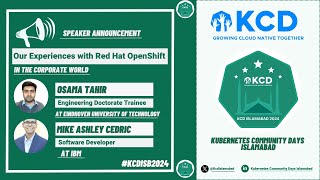 21mOur Experiences with Red Hat OpenShift in the Corporate World
 22mOpenShift, or Kubernetes on steroids
 40mThe Good, the Bad, and the Ugly of Managing Production Systems with Kubernetes
 15mBenefits of Taking the Less Traveled Road with Containers Infrastructure