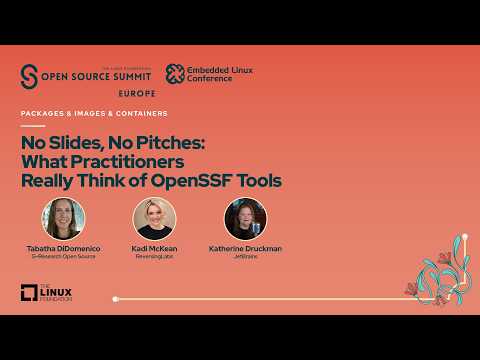
No Slides, No Pitches: What Practitioners...
summary
Practitioner feedback shows a wide adoption gap: many teams know about Salsa, Sigstore, Scorecard, OpenVEX and the OSPS Baseline but far fewer actually implement them; one maintainer managing ~2,000 repos says existing in-house solutions block adoption. SBOMs are generated by roughly half of teams but downstream consumption is rare because SBOMs are inconsistent, detach from artifacts, and raise legal worry — summarized as SBOMs not trusted. Tools highlighted that help: Sigstore provenance, Salsa build provenance levels, Scorecard checks, Darnit automation, Zarf for air-gapped, and AlphaOmega funding.
AI-written summary · about
chapters (26)
- 0:00Introduction and welcome
- 1:04Threats in software supply chain
- 3:32Three ways threats enter systems
- 5:18Real-world examples of attacks
- 7:23Introduction to OpenSSF
- 9:28Software development lifecycle gates
- 10:54OpenSSF projects landscape
- 11:37Feedback from practitioners
- 13:02Key questions for adoption
- 14:07Adoption gap in security tools
- 17:57SBOM trust and adoption issues
- 21:48Starting with security problems
- 24:58Too many badges and wayfinding
- 27:07Maintainer lightning round
- 27:51Top OpenSSF projects to start with
- 28:12Source code Scorecard explained
- 29:38Sigstore for artifact verification
- 30:43Salsa build provenance levels
- 32:10OSPS baseline for security controls
- 32:52Darnit audit framework
- 33:55Alpha Omega funding security work
- 34:59EU Cyber Resilience Act overview
- 36:43Where to start with security
- 37:04Getting involved with OpenSSF
- 38:27Call to action and feedback
- 39:29Q&A and closing remarks