BoF: Open by Default or Intent:...
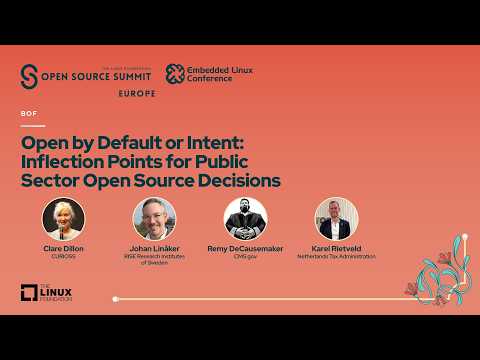
summary
Session maps the concrete decision points public bodies use: US federal agencies list four exemption categories (security/privacy, national security, export compliance, disposable experiments) and default federal code to public domain CC0; the Netherlands enacts an open unless law while running 3,000 engineers who maintain a 50‑year application and stage new projects as open after June 2024; teams adopt an developer portal for inner sourcing, report seven clustered risk themes from live Mentimeter data, and note no settled AI contribution policy yet.
AI-written summary · about
chapters (14)
- 0:00Introduction and session overview
- 1:45Open as possible closed as necessary
- 8:26Public sector reasons to close code
- 10:11Audience input on closed code
- 10:53US policy exemptions for closed code
- 17:56Dutch open government laws and challenges
- 21:26Swedish public sector concerns
- 24:55University open research policies
- 27:00Audience responses and analysis
- 33:02Q&A on AI and open source
- 36:09Developer portals and inner sourcing
- 38:17Fragmentation in public sector stacks
- 40:49Inner sourcing within government
- 41:50Closing remarks and next steps