Lightning Talk - Realizing the Multi-Cloud Promise of Kubernetes

summary
Disney runs Kubernetes across OpenStack, GCE and AWS and finds GKE boots fast but lacks low‑level VPC control so custom automation replaces kube‑up/kops to enforce direct‑connect/VPN topology. DNS breaks are fixed by moving from SkyDNS to kube-dns to bind split DNS that forwards to AWS internal and corporate resolvers. Logging stays local to avoid egress charges: deploy ELK per-cluster with tribe nodes to query across clouds. The custom setup is operational and reduces cross‑cloud surprises.
AI-written summary · about
chapters (6)
- 0:00Introduction to Disney Cloud
- 0:21Network Connectivity Strategy
- 1:20Cluster Deployment Methods
- 2:42Resolving DNS Challenges
- 3:39Enterprise Logging Strategy
- 4:45Conclusion
related talks
 05mLightning Talk: What Makes a Good Multi-tenant Kubernetes Solution?
 41mAn Adventure in Multi-Cloud with Kubernetes
 33mKubernetes-Driven Multi-Cloud Deployments: Maximizing Scalability and Flexibility
 27mKubernetes Everywhere: Lessons Learned From Going Multi-Cloud
 36mThe Architecture of a Multi-Cloud Environment with Kubernetes
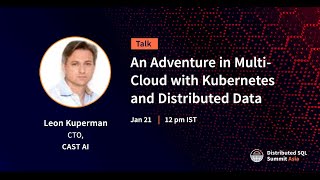 31mAn Adventure in Multi Cloud with Kubernetes and Distributed Data
 21m07 Lightning talks
 06mKeynote Lightning Talk: Openness in a Cloud Centric World